A dementia diagnosis changes life for the whole family. It can affect memory, thinking, emotions, and daily routines. It can also leave people feeling worried, confused, or alone. Even so, help is available. With the right support, people with dementia and those who care for them can still enjoy meaningful moments together.
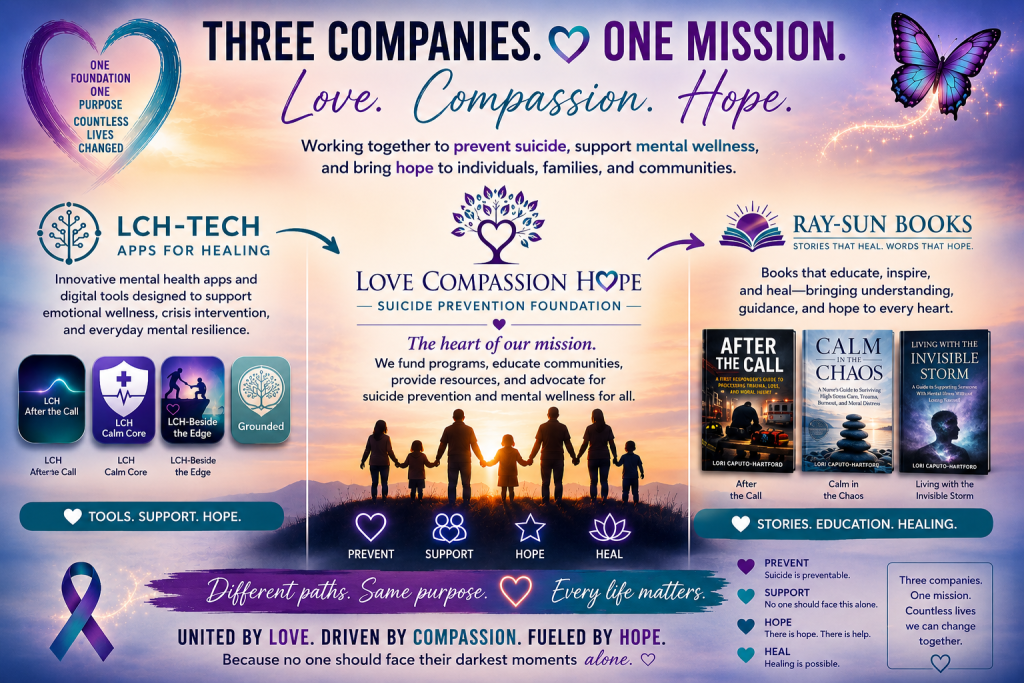
The Love, Compassion, Hope Suicide Prevention Foundation offers mental health resources, books, mobile apps, and practical guidance for older adults, caregivers, and families. Our goal is to provide hope, support, and easy-to-understand information.
What Is Dementia?
Dementia is a group of brain diseases. These diseases affect memory, thinking, learning, and daily life.
Common types include:
- Alzheimer’s disease
- Vascular dementia
- Lewy body dementia
- Frontotemporal dementia (FTD)
- Mixed dementia
Although dementia is more common as people get older, it is not a normal part of aging.
Common Signs
The signs often appear slowly. At first, they may seem like simple forgetfulness.
You may notice:
- Memory loss
- Trouble planning or solving problems
- Difficulty doing familiar tasks
- Confusion about time or place
- Trouble finding words
- Losing or misplacing things
- Poor judgment
- Changes in mood
- Pulling away from family or friends
- Trouble following conversations
Getting help early can make planning easier.
Supporting Brain Health
Healthy habits support the brain and the body.
Try to:
- Stay active.
- Eat healthy meals.
- Spend time with family and friends.
- Keep learning new things.
- Sleep well.
- Manage stress.
- Treat health problems.
- Avoid smoking.
- Limit alcohol.
- Protect your head from injury.
Small habits can make a difference over time.
Helping Someone with Dementia
Patience and kindness matter every day.
You can help by:
- Speaking slowly.
- Using simple words.
- Keeping a daily routine.
- Giving one step at a time.
- Making the home safe.
- Encouraging independence.
- Focusing on what they can still do.
- Celebrating small successes.
Every person is different. As the disease changes, your approach may need to change too.
Caring for Yourself
Caregiving is rewarding, but it can also be exhausting.
Remember to:
- Take breaks.
- Accept help.
- Join a support group.
- Stay active.
- Eat healthy foods.
- Get enough sleep.
- Talk about your feelings.
- Make time for yourself.
When you care for yourself, you are better able to care for someone else.
When to Ask for Help
Some situations need extra support.
Talk with a healthcare provider if you notice:
- Severe sadness
- Caregiver burnout
- Thoughts of self-harm
- Wandering
- Unsafe behavior
- Frequent falls
- Extreme confusion
- Trouble providing daily care
Getting help early can improve safety and quality of life.
Dementia Resources
The Love, Compassion, Hope Suicide Prevention Foundation provides resources for older adults, caregivers, and families.
These include:
- Still Here book
- LCH-Elder Care app
- Mental health articles
- Caregiver guides
- Wellness resources
- Community support information
- Practical caregiving tools
These resources offer education, encouragement, and hope for every stage of the journey.
You Are Not Alone
A dementia diagnosis changes life. However, it does not take away love, dignity, or hope.
Support is available. Better days are still possible. You do not have to walk this journey alone.