Living With Grief After Suicide Loss
After the Shock
The shock begins to fade.
However, the grief often grows deeper.
The phone calls become less frequent.
Visitors return home.
Life slowly moves forward.
Meanwhile, you may feel as though your world has stopped.
This stage of grief can feel lonely.
Questions become louder.
Memories become stronger.
Most importantly, you do not have to face those feelings alone.
After the Shock was written to help suicide loss survivors understand grief, find support, and begin healing one step at a time.
When the Shock Begins
The first days often feel like survival.
Later, life becomes quieter.
That quiet can be difficult.
Many people begin asking questions they could not ask during the first days after the loss.
For example:
- Why did this happen?
- Could I have done more?
- Did they know I loved them?
- Will this pain ever end?
Although those questions are common, they rarely have simple answers.
Healing begins by learning to live with both the questions and the love that remains.
Grief Looks Different for Everyone
No two people grieve the same way.
Sometimes, you may cry without warning.
Other times, you may feel emotionally numb.
You may feel angry.
Feel guilty.
You may even laugh again.
Every emotion has a place in grief.
Above all, give yourself permission to grieve in your own way.
Common Feelings
Many suicide loss survivors experience:
- Sadness
- Anger
- Guilt
- Regret
- Loneliness
- Anxiety
- Confusion
- Fear
- Emotional exhaustion
- Hope
Furthermore, these emotions often change from one day to the next.
Healing is not a straight line.
Living With Unanswered Questions
Suicide often leaves questions behind.
Unfortunately, some answers may never come.
Instead, healing begins when we stop searching for perfect answers and start caring for ourselves with compassion.
That does not mean giving up.
It means allowing yourself to heal while honoring your loved one’s memory.
Taking Care of Yourself
Grief affects both your body and your mind.
Therefore, small steps matter.
Try to:
- Drink water.
- Eat healthy meals.
- Rest when you can.
- Take short walks.
- Accept help from others.
- Spend time with supportive people.
- Write in a journal.
- Practice self-compassion.
Most importantly, remember that healing takes time.
You Do Not Have to Grieve Alone
Grief often feels isolating.
However, support can make a meaningful difference.
Talking with trusted friends, family members, counselors, faith leaders, or support groups can help lighten the emotional weight.
Likewise, connecting with other suicide loss survivors often reminds people they are not alone.
Finding Hope Again
Hope may feel impossible today.
Even so, healing is still possible.
One day, you may smile at a memory.
Another day, you may laugh without guilt.
Eventually, those moments become part of your healing journey.
Hope does not replace grief.
Instead, hope grows beside it.
Resources from Our Foundation
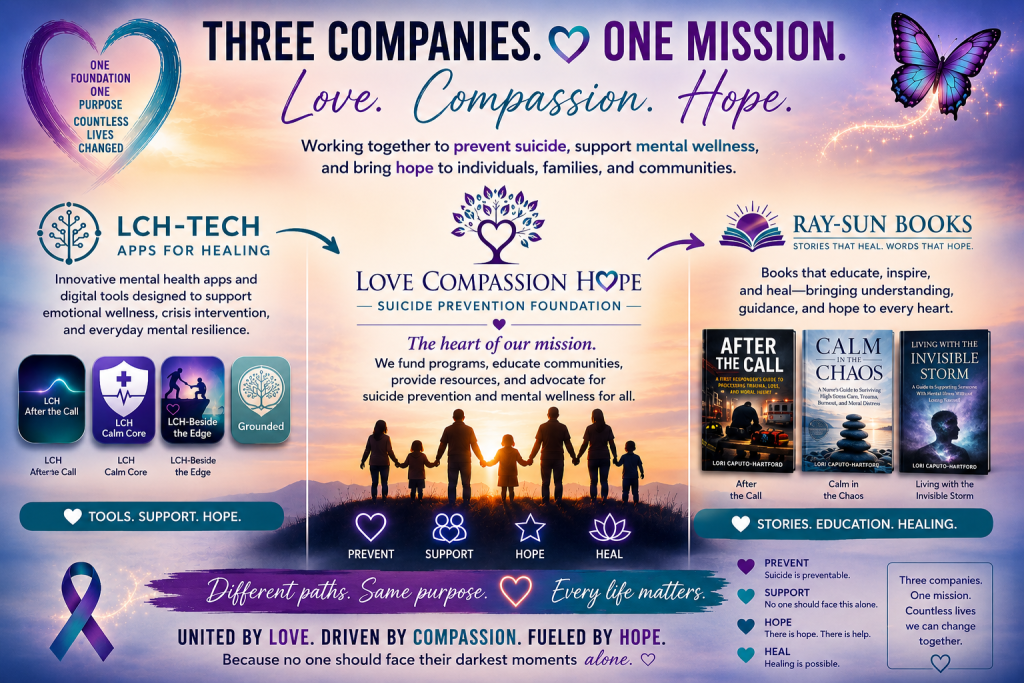
Companion App
LCH-After the Silence
The companion app provides:
- Daily encouragement
- Guided journaling
- Coping strategies
- Memorial tools
- Emotional wellness exercises
- Healing activities
- Helpful resources
Continue the Journey
Book One
After the Silence
Begin your healing journey by understanding emotional shock, trauma, and the first days after suicide loss.
Book Three
What Remains
Continue your journey by exploring remembrance, resilience, hope, and learning to carry love forward.
Additional Resources
You may also find these helpful:
- Shattered Light
- Grief & Suicide Loss
- Trauma & Recovery
- Crisis & Immediate Support
- Mental Illness & Family Support
- Community Partners & Resources
You Are Not Alone
Grief changes with time.
However, love remains.
Healing happens one step at a time.
Most importantly, you never have to walk this journey by yourself.
The After the Silence series was created to offer compassion, understanding, and hope through every stage of suicide loss.
Your story matters.
Loved one matters.
Hope is still possible.
APP: LCH-After the Silence