Strong Enough to Care for Others. Strong Enough to Care for Yourself.
Every Shift Is Different
You never know what the next call will bring.
A child who cannot breathe.
Serious crash.
Cardiac arrest.
A family saying goodbye.
Some calls stay with you long after the ambulance is cleaned and restocked.
That is part of the job.
However, carrying every call forever does not have to be.
Emotional resilience helps you recover, recharge, and continue serving your community without losing yourself along the way.
What Is Emotional Resilience?
Emotional resilience is the ability to recover after difficult experiences.
It is not about pretending you are okay.
It is not about ignoring your emotions.
Instead, it is about recognizing stress, processing difficult calls, and developing healthy ways to move forward.
Resilience grows with practice.
Every healthy choice makes you stronger.
Why It Matters
EMS professionals face challenges that many people never see.
Long shifts.
Interrupted sleep.
Critical patients.
Traumatic injuries.
Repeated loss.
High-pressure decisions.
Over time, those experiences can affect your emotional and physical health.
Building resilience helps protect both.
Signs You May Need Extra Support
Stress often builds slowly.
Pay attention if you notice:
- Feeling emotionally exhausted.
- Trouble sleeping.
- Becoming more irritable.
- Avoiding friends or family.
- Feeling disconnected.
- Losing interest in hobbies.
- Using alcohol or substances to cope.
- Feeling hopeless or overwhelmed.
These signs do not mean you are weak.
They mean your mind is asking for care.
Build Resilience Every Day
You do not have to make huge changes.
Small habits make a big difference.
Try to:
- Breathe before the next call.
- Stay hydrated.
- Eat when you can.
- Move your body.
- Stretch after long transports.
- Spend time outdoors.
- Get quality sleep.
- Stay connected with people who support you.
Small routines build lasting resilience.
After the Call
The patient may be gone.
The emotions may not be.
Give yourself permission to process difficult calls.
Talk with your partner.
Use peer support.
Attend debriefings.
Write about what happened.
Ask for help when you need it.
Processing trauma is part of staying healthy.
Life Outside the Ambulance Matters
Your career is important.
It is not your entire identity.
Spend time with your family.
Laugh with friends.
Take vacations.
Enjoy hobbies.
Protect your relationships.
The healthier your personal life is, the stronger you will be on the job.
Resources from Our Foundation
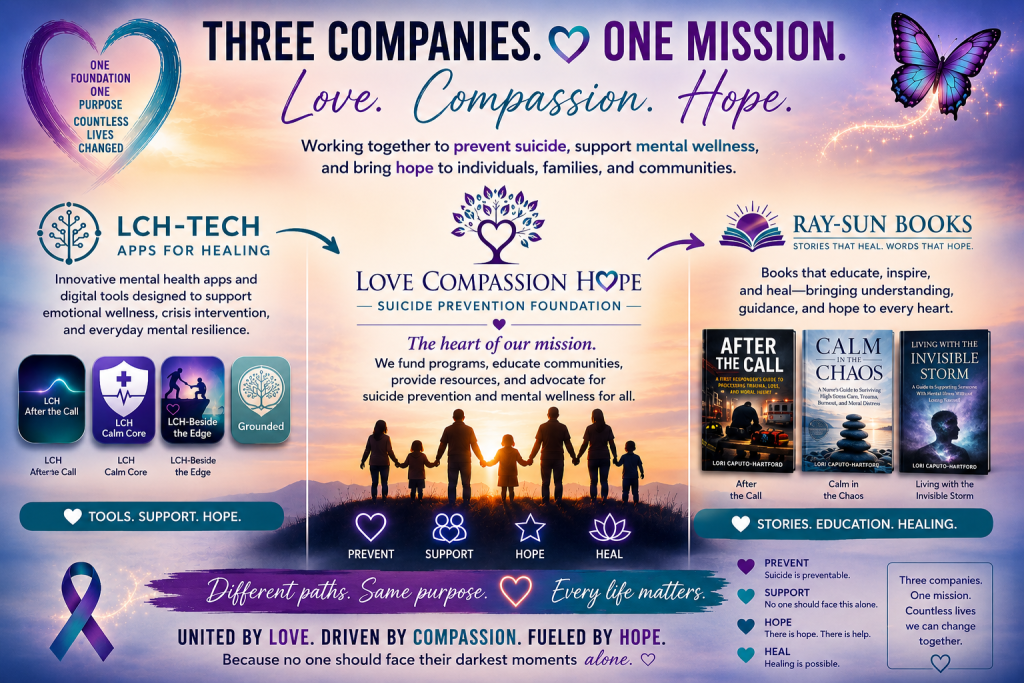
The Love, Compassion, Hope Suicide Prevention Foundation created resources to support EMS professionals before, during, and after difficult calls.
Companion Book
After the Call
Learn practical strategies for managing cumulative trauma, burnout, compassion fatigue, PTSD, emotional resilience, peer support, and long-term mental wellness.
Companion App
LCH-After the Call
The app includes:
- Wellness check-ins
- Guided breathing
- Grounding exercises
- Stress management tools
- Journaling
- PTSD resources
- Peer support
- Family resources
- Crisis tools
- Emotional resilience exercises
Whether your shift was routine or unforgettable, LCH-After the Call is there to help you recover and keep moving forward.
Keep Going
Some calls will stay with you.
Some lives will stay with you.
So will the families you comfort.
The children you help.
The patients you save.
Take care of yourself with the same compassion you give every patient.
You matter.
Your health matters.
Your resilience matters.
Keep showing up.
Continue healing.
Keep going.