Firefighter Stress is part of the job. Firefighters face danger, long shifts, difficult calls, and heartbreaking situations. Over time, that stress can affect your mind, body, and relationships. Learning how to manage Stress helps you stay healthy at work and at home.
The Love, Compassion, Hope Suicide Prevention Foundation created this Firefighter Stress guide to help firefighters recognize stress, build healthy habits, and find support before stress becomes burnout.
Why Firefighter Stress Happens
Every call is different.
Some calls stay with you.
Stress can come from:
- Traumatic emergencies.
- Long shifts.
- Lack of sleep.
- Heavy responsibility.
- Family demands.
- Physical exhaustion.
- Repeated exposure to loss.
Stress builds over time if it is ignored.
Signs of Firefighter Stress
Everyone reacts differently.
You may notice:
- Feeling tired all the time.
- Trouble sleeping.
- Anger or irritability.
- Feeling anxious.
- Feeling numb.
- Pulling away from others.
- Losing interest in things you enjoy.
- Trouble concentrating.
These signs are common.
They are not signs of weakness.
Healthy Ways to Manage Firefighter Stress
You cannot remove every stressful call.
You can take care of yourself.
Try to:
- Talk with someone you trust.
- Exercise regularly.
- Eat healthy meals.
- Get enough sleep.
- Practice deep breathing.
- Spend time with family.
- Make time for hobbies.
Small habits help reduce stress over time.
Do Not Carry It Alone
Firefighters work as a team.
Healing works the same way.
Reach out to:
- Your crew.
- Peer support.
- A chaplain.
- A counselor.
- A mental health professional.
- Family or trusted friends.
Asking for help is a sign of courage.
Firefighter Stress Can Be Managed
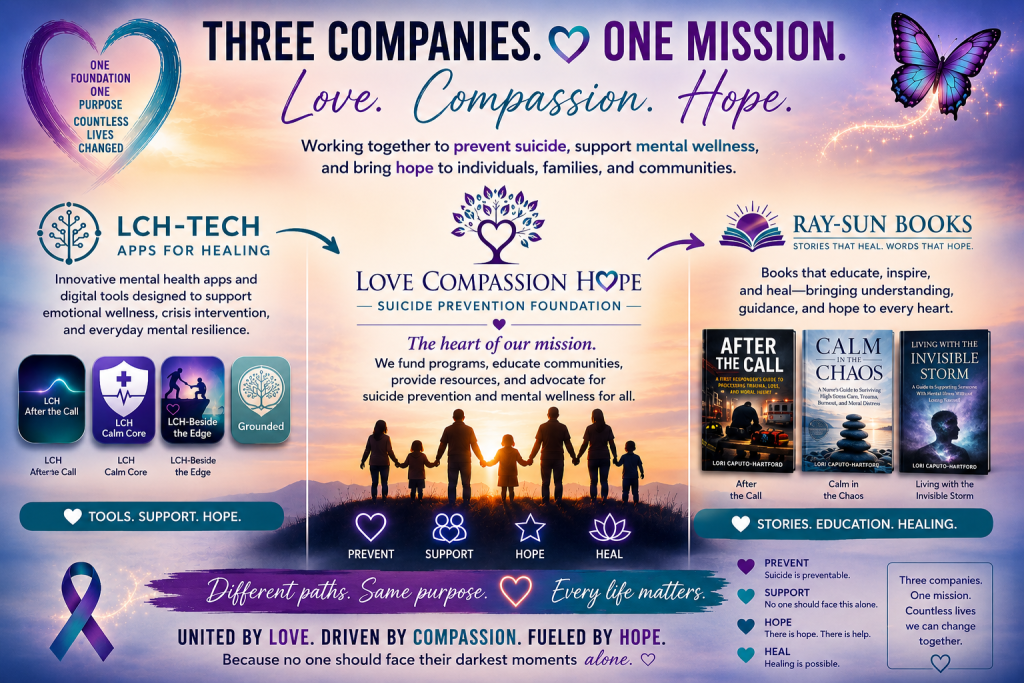
The Love, Compassion, Hope Suicide Prevention Foundation believes Firefighter Stress deserves the same attention as physical injuries. Our books, mobile apps, educational resources, and support tools help firefighters reduce stress, prevent burnout, and build resilience throughout their careers.
Healthy firefighters build stronger departments.
Strong departments protect stronger communities.
You Matter
Stress does not have to control your life.
Take care of your mind.
Take care of your body.
Accept support.
Keep talking.
Keep healing.
You matter every day.