Find compassionate support after losing a loved one. Learn healthy ways to grieve, honor memories, care for yourself, and find hope through healing and support.
After Losing a Loved One
Losing someone you love changes your life forever.
Whether your loved one died after a long illness, an unexpected event, or another cause, grief can affect every part of your life. You may feel overwhelmed, heartbroken, exhausted, or unsure how to move forward.
Although life may never be the same, healing is possible.
The Love, Compassion, Hope Suicide Prevention Foundation created this resource to provide comfort, education, and hope for anyone grieving the loss of a loved one.
Understanding Grief
Grief is a natural response to loss.
Everyone experiences grief differently. Some people cry often. Others become quiet or feel emotionally numb. You may have good days followed by difficult ones.
However, there is no right or wrong way to grieve.
Your journey is unique.
Common Feelings After Losing a Loved One
You may experience:
- Sadness
- Shock
- Anger
- Guilt
- Anxiety
- Loneliness
- Exhaustion
- Confusion
- Relief
- Hope
These emotions may come and go without warning.
Furthermore, grief often changes over time. Healing is not a straight path, and progress may feel different from one day to the next.
Healthy Ways to Grieve
Although grief cannot be rushed, healthy coping strategies can help you move forward.
You may find comfort by:
- Talking about your loved one
- Writing in a journal
- Creating a memory box
- Looking through photographs
- Spending time in nature
- Practicing self-compassion
- Joining a grief support group
- Talking with a trusted friend or counselor
Most importantly, allow yourself to feel your emotions without judgment.
Honoring Their Memory
Love does not end when someone dies.
Many families find healing by:
- Sharing stories and memories
- Celebrating birthdays and anniversaries
- Lighting a candle
- Planting a tree or garden
- Creating a memorial
- Supporting a cause they cared about
- Continuing family traditions
Keeping your loved one’s memory alive can become an important part of healing.
Returning to Daily Life
Returning to everyday routines can feel overwhelming.
Start with small steps.
Be patient with yourself.
Celebrate even small accomplishments.
Remember that healing does not mean forgetting.
Instead, it means learning to carry love and loss together.
Taking Care of Yourself
Grief affects both your emotional and physical health.
During difficult days, try to:
- Eat nourishing meals.
- Stay hydrated.
- Get enough rest.
- Move your body gently.
- Spend time outdoors.
- Accept help from others.
- Be kind to yourself.
Small acts of self-care can support healing over time.
Building Your Support Network
You do not have to walk through grief alone.
Support may come from:
- Family members
- Friends
- Faith communities
- Bereavement groups
- Professional counselors
- Community organizations
Reaching out for support is a sign of strength, not weakness.
When You May Need Additional Help
Sometimes grief becomes so overwhelming that additional support is needed.
Consider speaking with a mental health professional if:
- You cannot manage daily responsibilities.
- You feel hopeless most days.
- You isolate yourself completely.
- You rely on alcohol or drugs to cope.
- You experience thoughts of harming yourself.
There is help available, and healing is possible.
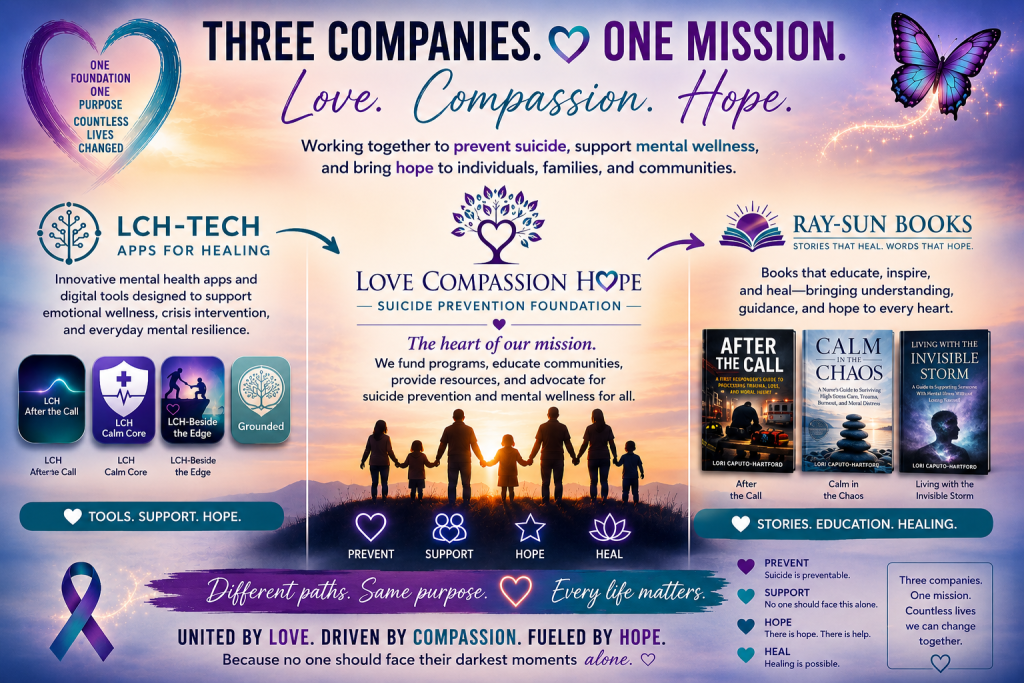
Resources from the Love, Compassion, Hope Suicide Prevention Foundation
Recommended Apps
LCH-Uplift
LCH-Uplift offers compassionate grief support through guided reflections, coping tools, emotional wellness exercises, journaling, and encouragement for individuals navigating loss.
LCH-After the Silence (for suicide loss)
Provides specialized support, memorial resources, education, and healing tools for individuals and families grieving the loss of someone to suicide.
Recommended Books
What Remains
A compassionate guide to living with grief while honoring the memory of someone deeply loved and learning to move forward with hope.
Shattered Light
A deeply personal memoir of grief, love, resilience, and healing after the death of a son to suicide. Many readers find comfort in its message of hope and perseverance.
After the Silence and After the Shock (for suicide loss)
These books provide education, support, and understanding for individuals and families navigating the unique challenges of suicide bereavement.
You May Also Find These Resources Helpful
- Grief & Suicide Loss
- Trauma & Recovery
- Mental Illness & Family Support
- Crisis & Immediate Support
- Community Partners & Resources
- Resource Center
You Are Not Alone
Grief changes us.
However, it does not erase the love you shared.
Take one breath.
One step.
One day at a time.
Allow yourself to remember.
Allow yourself to heal.
Above all, remember this:
Your love lives on.
Your grief matters.
You are not alone.
The Love, Compassion, Hope Suicide Prevention Foundation is honored to walk beside you with compassion, understanding, and hope throughout your healing journey.
When Loss Follows a Serious Illness
Losing a loved one after a serious illness, such as cancer, mesothelioma, Alzheimer’s disease, or another life-limiting condition, can bring unique emotions.
Many families begin grieving long before death occurs. This is often called anticipatory grief. Months or even years of caregiving, medical appointments, and uncertainty can leave caregivers physically and emotionally exhausted.
After the loss, you may feel overwhelming sadness. However, you may also experience relief that your loved one’s pain has ended. Some people even struggle with guilt for feeling that relief.
These emotions are normal.
Healing takes time, and there is no right or wrong way to process your grief. Be patient with yourself. Allow yourself to rest, accept support from others, and remember that caring for yourself is an important part of healing.
If your loved one died from cancer, mesothelioma, or another serious illness, you may also find comfort in our Cancer & Serious Illness Mental Health resources. In addition, families affected by mesothelioma can explore the Mental Health & Mesothelioma Guide created in partnership with Lanier Law Firm, which offers information about the emotional impact of serious illness, caregiving, grief, and finding support during and after loss.