Giving a death notification is one of the hardest parts of the job. Police officers, deputies, firefighters, EMS providers, correctional officers, dispatchers, military members, and chaplains often carry these calls with them for a long time.
Families remember this day for the rest of their lives. First responders often remember it, too.These reactions do not mean you are weak. They mean you care.
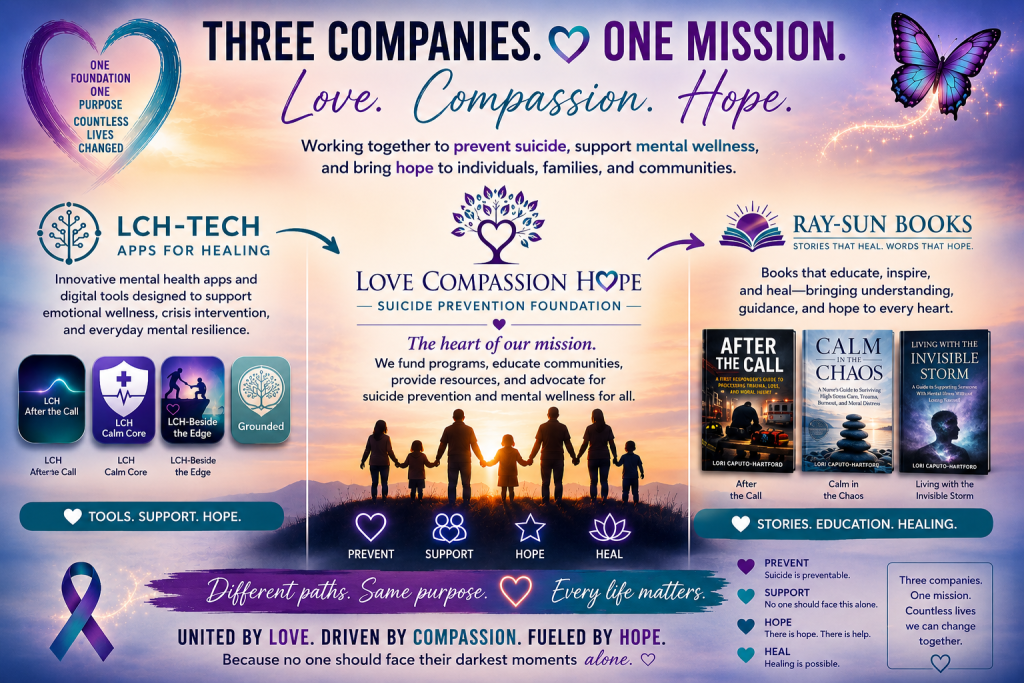
The Love, Compassion, Hope Suicide Prevention Foundation provides mental health resources, books, mobile apps, and educational tools to help first responders process difficult calls, reduce emotional stress, and protect their long-term well-being.
How These Calls Affect You
Every call is different. Even so, many first responders have similar reactions after giving this news.
You may notice:
- Emotional heaviness or sadness
- Guilt or self-doubt
- Trouble sleeping
- Irritability or frustration
- Intrusive memories
- Emotional numbness
- Difficulty concentrating
- Feeling overwhelmed
Some reactions fade with time. Others may last longer. Either way, your feelings deserve attention.
Preparing for Difficult Notifications
Whenever possible, preparation can make the process more manageable.
Before the notification:
- Confirm the available facts.
- Work with another responder when appropriate.
- Choose a quiet setting whenever possible.
- Take a slow breath before approaching the family.
Simple preparation helps you remain calm and compassionate.
During the Notification
Families often remember how they were treated more than every word that was spoken.
Try to:
- Speak honestly and clearly.
- Use simple language.
- Allow silence when it is needed.
- Answer questions as best you can.
- Show compassion and respect.
- Explain the next steps if appropriate.
You cannot remove someone’s pain. However, you can help them feel supported during one of the worst moments of their life.
Taking Care of Yourself After the Call
Once the notification is complete, your work is not finished. Your own recovery matters too.
After the call:
- Check in with yourself.
- Talk with a trusted coworker or supervisor.
- Write about the experience if that helps.
- Move your body and stay hydrated.
- Practice deep breathing or grounding exercises.
- Spend time with supportive people.
Small actions today can reduce stress tomorrow.
When to Reach Out for Help
Sometimes a difficult notification stays with you longer than expected.
It may be time to get help if you notice…
- Flashbacks or intrusive thoughts
- Frequent nightmares
- Ongoing guilt
- Emotional numbness
- Increased alcohol or substance use
- Loss of interest in daily life
- Persistent anxiety or depression
- Thoughts of harming yourself
Reaching out is a sign of strength. Early support can prevent larger problems later.
Resources for First Responders
The Love, Compassion, Hope Suicide Prevention Foundation offers resources designed specifically for those who serve others.
Our first responder resources include:
- LCH-After the Call mobile app
- Mental health articles and recovery guides
- Books for police, fire, EMS, corrections, dispatchers, and military personnel
- Practical coping tools
- Crisis resources
- Peer support information
- Educational materials for departments and agencies
Our goal is simple: help those who protect others protect their own mental health.
You Are Not Alone
Every death notification changes two lives. It changes the life of the family receiving the news, and it can also affect the person delivering it.
You showed up with courage and compassion. Now give yourself permission to heal.
Support is available. Hope is real. You do not have to carry the weight alone.